
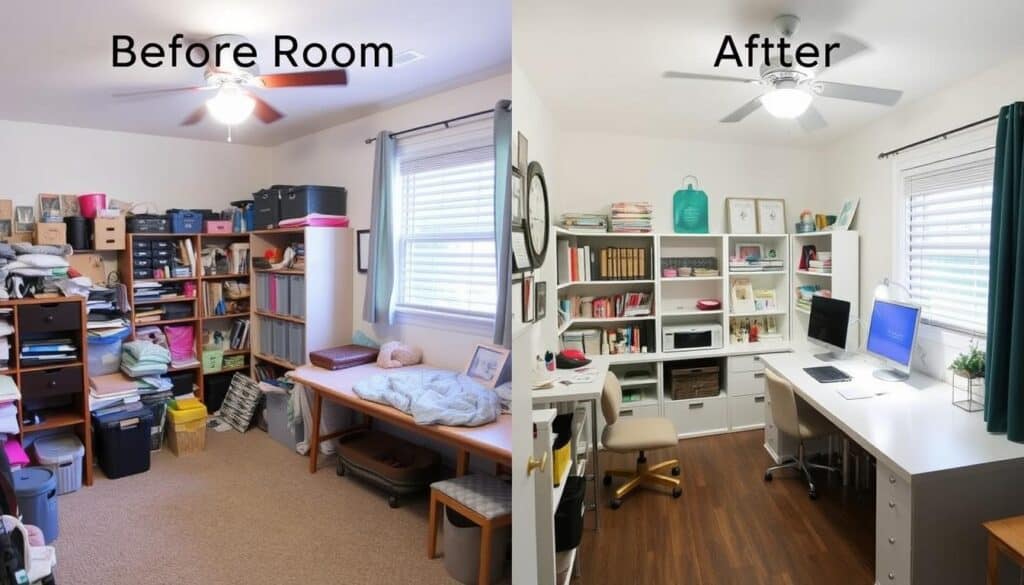
A dedicated hobby room is more than just a space—it’s a sanctuary where creativity flows and passions come alive. Whether you’re a crafter, artist, gamer, musician, or fitness enthusiast, having a well-designed hobby room can enhance your experience and productivity. This guide will walk you through everything you need to know about creating a functional, inspiring hobby room design that perfectly suits your interests and maximizes your available space.
Why Invest in a Dedicated Hobby Room Design?
Having a dedicated space for your hobbies offers numerous benefits beyond just keeping your supplies organized. A well-designed hobby room can:
- Increase your productivity by eliminating setup and cleanup time
- Enhance creativity by providing an inspiring environment
- Reduce stress by creating a dedicated space for relaxation and enjoyment
- Prevent hobby materials from cluttering other areas of your home
- Allow you to leave projects in progress without disruption
Most importantly, a hobby room acknowledges the value of your interests and makes them a priority in your life. It’s an investment in your wellbeing and personal fulfillment.
Planning Your Hobby Room: Key Considerations
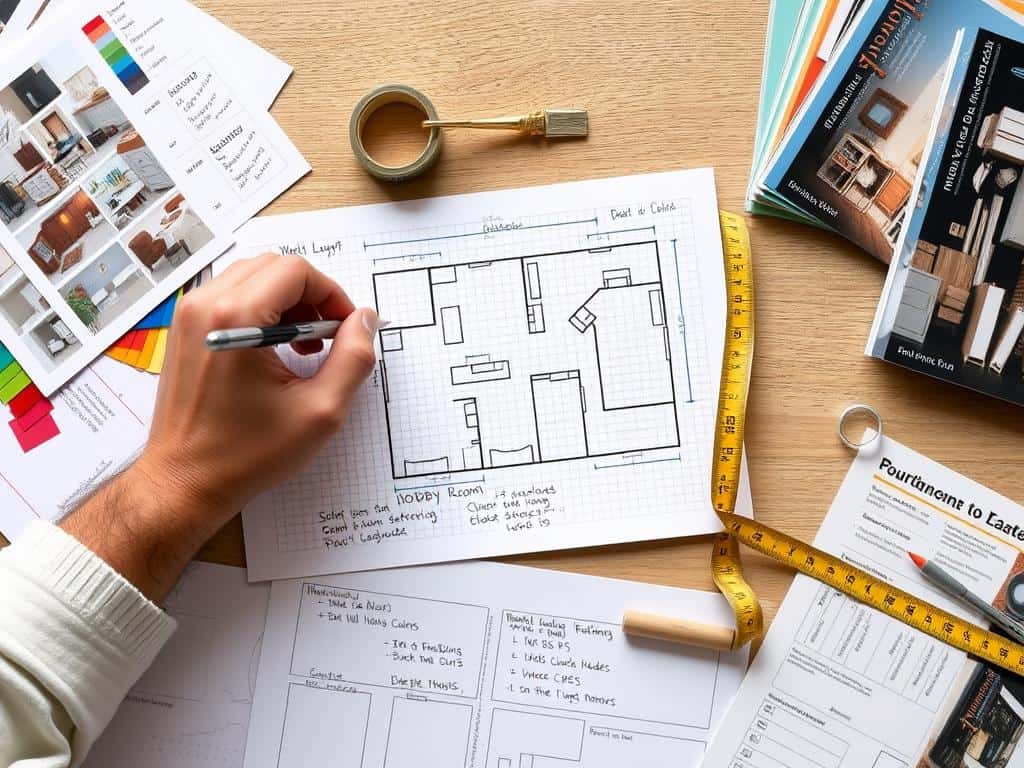
Before diving into your hobby room design, take time to plan thoughtfully. Consider these essential factors:
Assess Your Space
Start by evaluating the available space. Whether you’re converting a spare bedroom, basement area, or just a corner of a room, knowing your dimensions is crucial. Measure the room carefully, noting the location of windows, doors, electrical outlets, and any architectural features that might impact your design.
Identify Your Hobby Needs
Different hobbies have different requirements. Make a comprehensive list of all the activities you’ll be doing in your hobby room and what each requires in terms of:
- Work surface area (tables, desks, easels)
- Storage needs (shelving, cabinets, drawers)
- Equipment space (sewing machine, gaming setup, exercise equipment)
- Specialized features (sink for art, soundproofing for music)
- Lighting requirements (natural light, task lighting)
Set a Budget
Determine how much you’re willing to invest in your hobby room. This will help guide decisions about custom storage versus DIY solutions, furniture quality, and which elements to prioritize.
Need Help Planning Your Perfect Hobby Room?
Our design experts can help you maximize your space and create a custom hobby room that perfectly fits your needs and budget.
Optimizing Your Hobby Room Layout
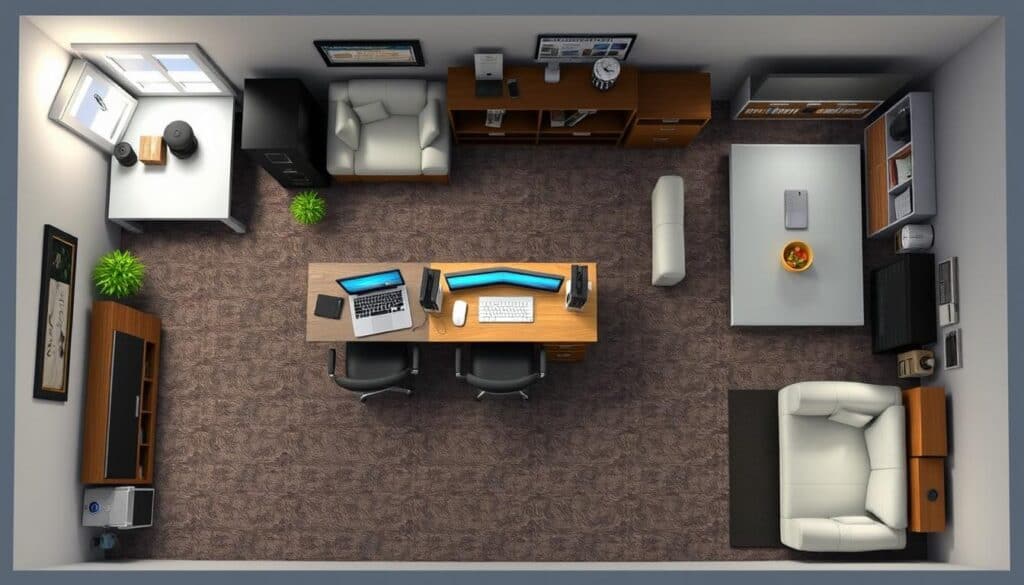
Create Activity Zones
Divide your hobby room into functional zones based on different activities. For example, a crafting room might include:
- Main workstation for primary projects
- Cutting/preparation area
- Storage zone for supplies
- Display area for finished projects
- Seating area for breaks or when friends join
Optimize Traffic Flow
Ensure there’s enough space to move comfortably between zones. Avoid placing furniture in ways that create obstacles or tight spaces. Consider the natural path you’ll take when working on projects and arrange your layout accordingly.
Maximize Natural Light
Position your main work area near windows when possible, especially for hobbies that require good color perception like painting, crafting, or sewing. However, be mindful of glare on computer screens for digital hobbies.
Consider Ergonomics
Your hobby room should be comfortable for long sessions. Ensure work surfaces are at appropriate heights, seating provides good support, and frequently used items are within easy reach. This prevents strain and makes your hobby time more enjoyable.
Plan for Growth
Most hobbyists accumulate more supplies and equipment over time. Build in some extra storage capacity and flexibility in your layout to accommodate future expansion of your hobby collection.
Smart Storage Solutions for Hobby Rooms
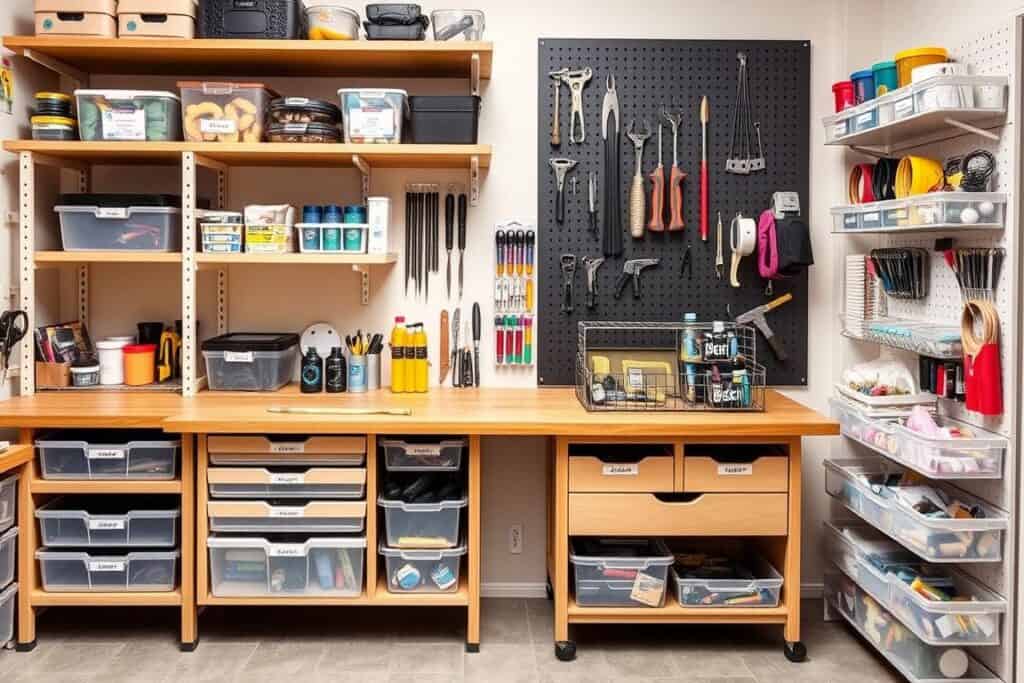
Effective storage is the foundation of a functional hobby room design. The right storage solutions keep supplies accessible while minimizing clutter.
Vertical Storage
Make the most of your wall space with:
- Adjustable shelving for flexibility as your needs change
- Pegboards for hanging tools and frequently used items
- Wall-mounted cabinets to keep dust-sensitive items protected
- Hanging organizers for small supplies
- Vertical file organizers for papers, patterns, or magazines
Drawer Systems
Drawers are ideal for organizing smaller items and keeping them dust-free. Consider:
- Drawer dividers to prevent items from mixing
- Shallow drawers for items like paper, fabric, or art supplies
- Deep drawers for bulkier items
- Clear drawer fronts or labels for easy identification
Specialized Storage
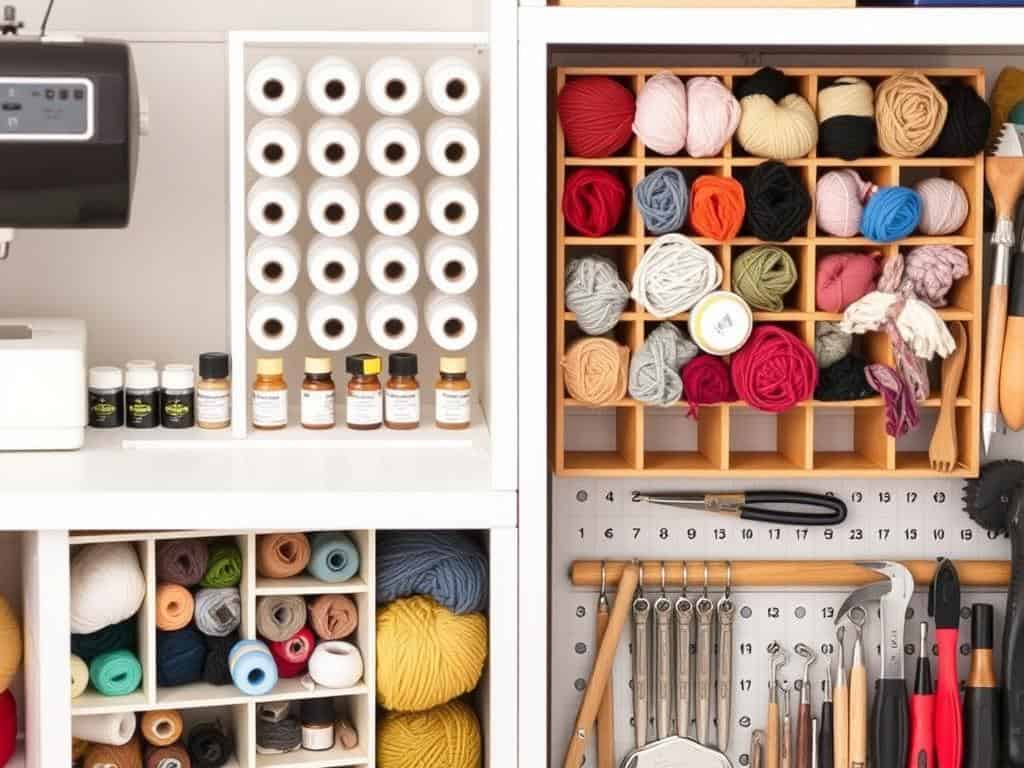
Different hobbies require unique storage solutions:
- Thread racks and fabric organizers for sewing
- Paint storage systems for artists
- Bead organizers for jewelry making
- Gaming shelves with console storage for gamers
- Instrument stands and sheet music storage for musicians
Mobile Storage
Rolling carts and storage units add flexibility to your space:
- Utility carts that can be moved where needed
- Rolling workstations that can be expanded or tucked away
- Storage ottomans that double as seating
- Folding tables for temporary work surface expansion
Transform Your Hobby Room Storage
Get custom storage solutions designed specifically for your hobby needs. Our experts will help you maximize every inch of your space.
Lighting Your Hobby Room Effectively
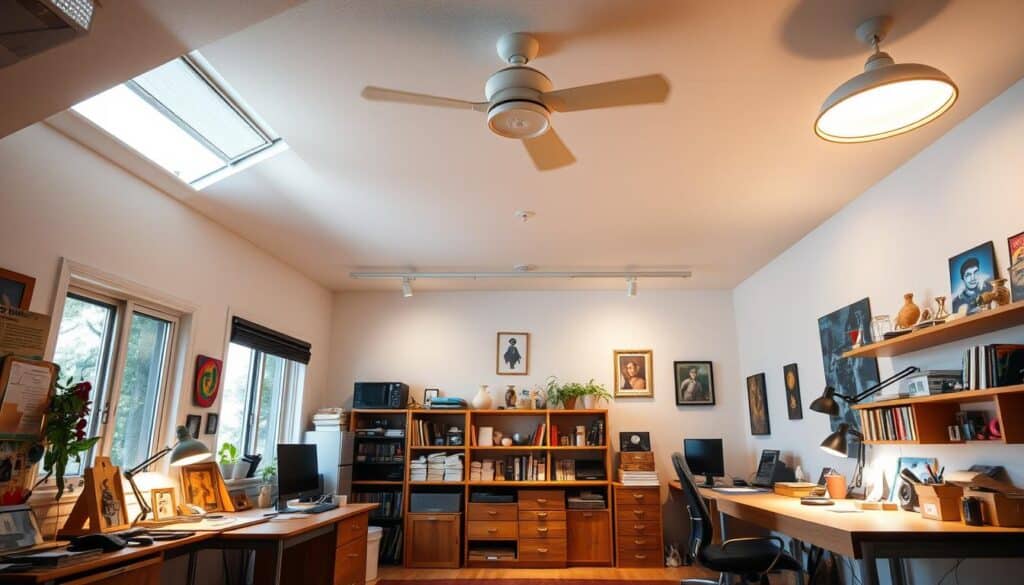
Proper lighting is crucial for most hobbies. A well-designed lighting plan includes multiple light sources to eliminate shadows and reduce eye strain.
Layer Your Lighting
Incorporate these three types of lighting for optimal results:
- Ambient lighting: Overall room illumination from ceiling fixtures or recessed lighting
- Task lighting: Focused light for detailed work, such as desk lamps or under-cabinet lighting
- Accent lighting: Highlights display areas or creates atmosphere
Consider Color Temperature
Different light temperatures affect how colors appear:
- Daylight bulbs (5000-6500K) provide the truest color representation for art, crafting, and detail work
- Warm white (2700-3000K) creates a cozy atmosphere but may alter color perception
- Cool white (3500-4100K) offers a balance between accuracy and comfort
Adjustable Options
Include lighting that can be adjusted based on your needs:
- Dimmer switches for controlling intensity
- Articulating lamps that can be positioned precisely
- Clip-on lights for temporary task lighting
- Light therapy lamps for windowless spaces
Hobby-Specific Room Design Ideas
Crafting & Sewing Room
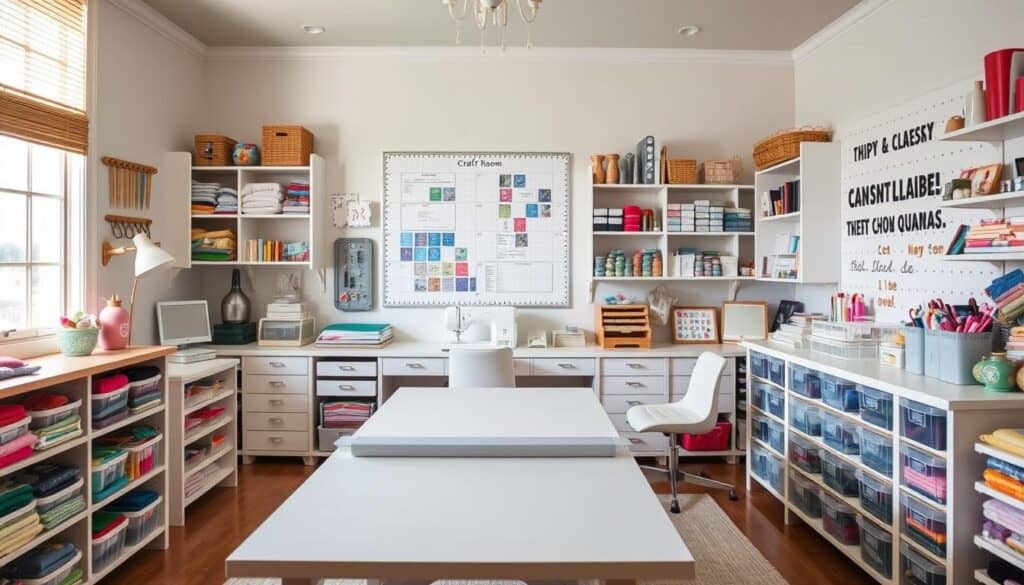
A well-designed crafting space prioritizes workflow and organization:
- Large cutting table at standing height (36-38 inches)
- Dedicated sewing machine station with ample surrounding space
- Storage for fabric, patterns, and notions
- Design wall for planning projects
- Good task lighting over all work areas
Art Studio
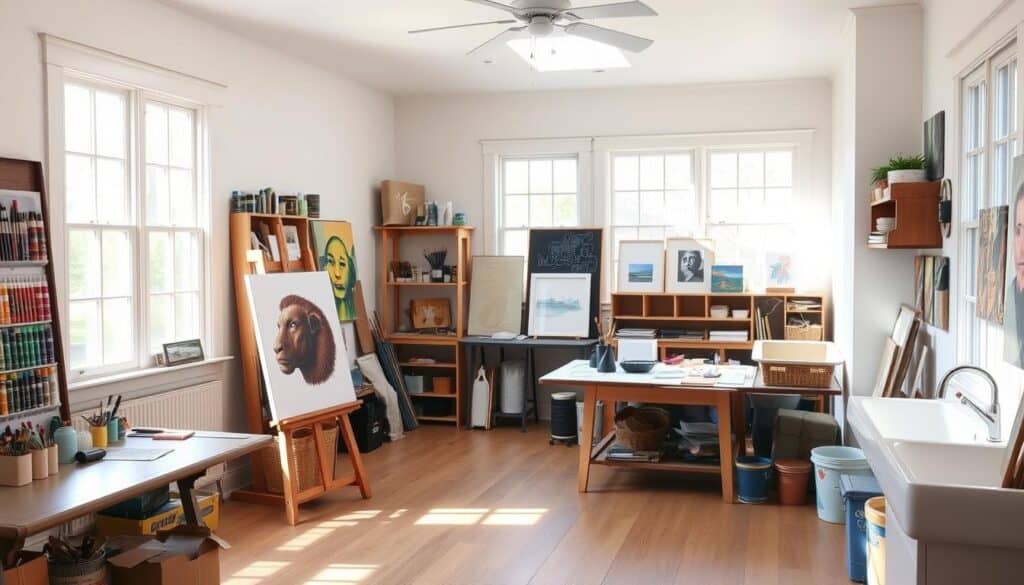
Artists need space that inspires creativity while being practical:
- North-facing windows for consistent, indirect light
- Easel positioned to maximize natural light
- Storage for canvases, papers, and supplies
- Sink or water source for cleanup (if possible)
- Display area for works in progress
Gaming Room
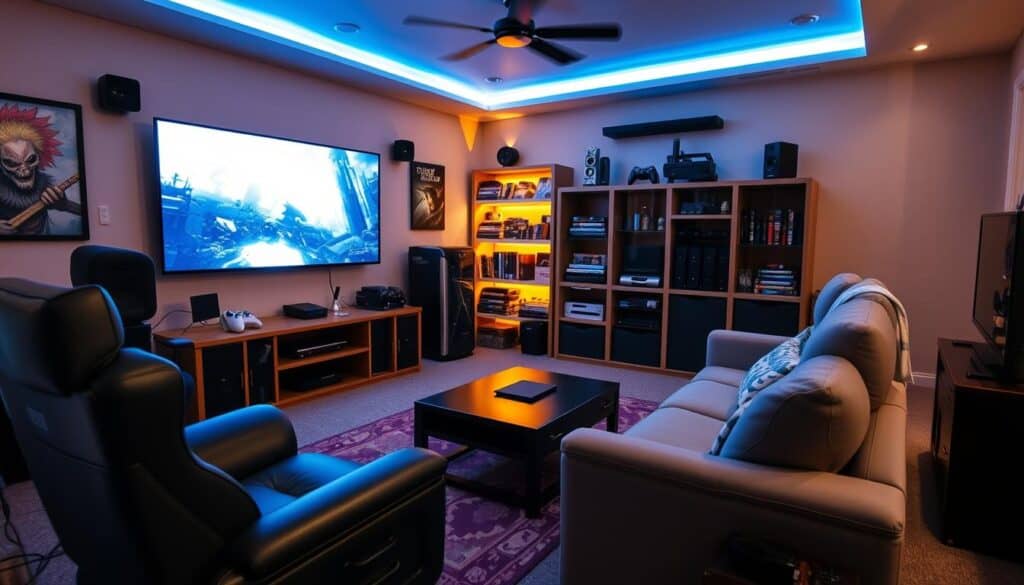
Create an immersive gaming experience with these elements:
- Ergonomic seating for comfortable long sessions
- Optimal screen placement to reduce glare
- Cable management solutions
- Storage for games, controllers, and accessories
- Ambient lighting with options to reduce screen fatigue
Music Room
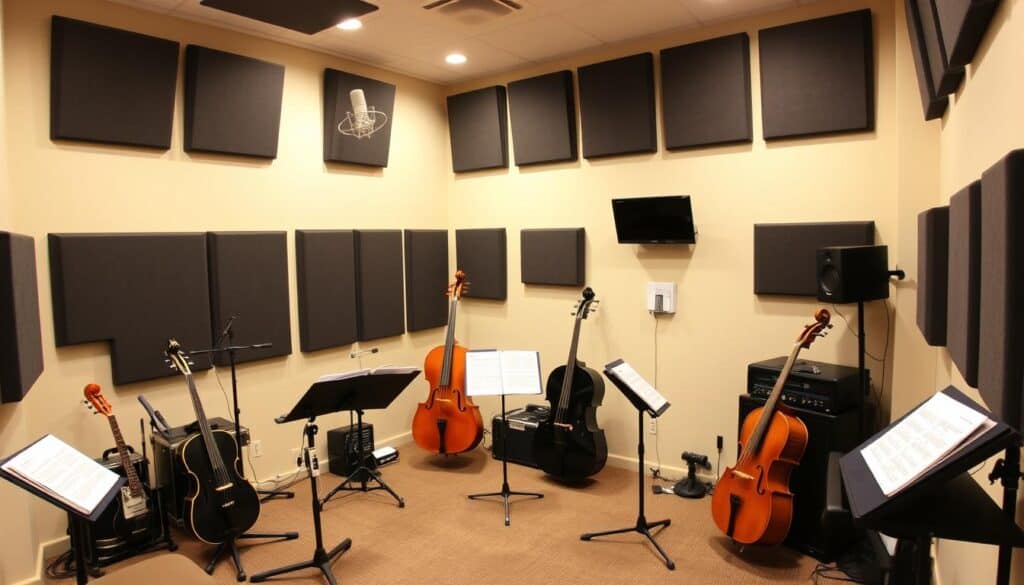
Musicians need spaces that sound as good as they look:
- Sound treatment to improve acoustics
- Instrument stands and wall mounts
- Sheet music storage and organization
- Space for recording equipment if needed
- Comfortable seating for practice sessions
Get Hobby-Specific Design Ideas
Download our free hobby room design guides tailored to your specific interests and space requirements.
Creating Multi-Purpose Hobby Rooms
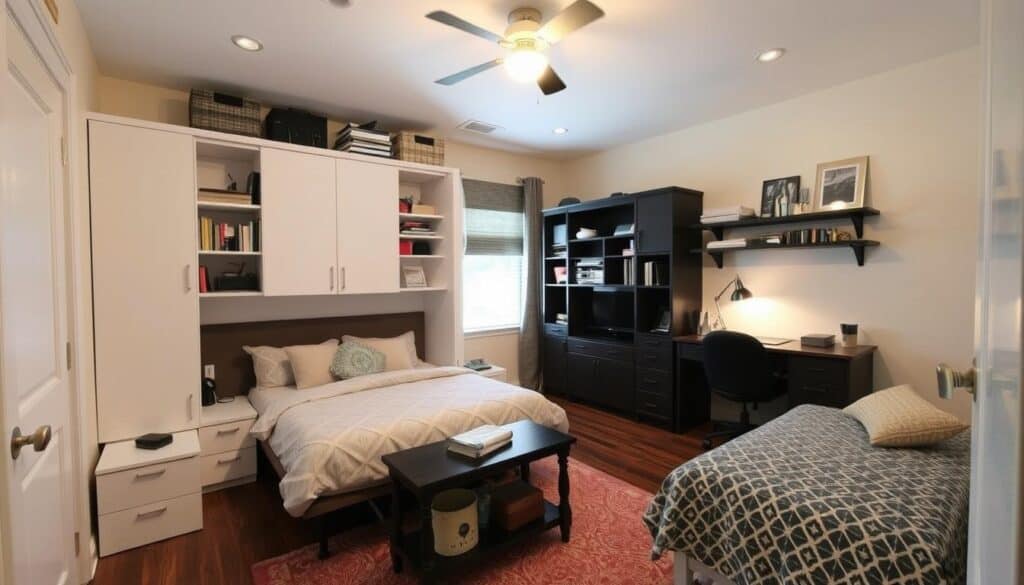
Many homes don’t have the luxury of a dedicated single-purpose room. Here’s how to create flexible spaces that serve multiple needs:
Hobby Room + Guest Room
Combine your hobby space with occasional guest accommodations:
- Murphy bed or sleeper sofa that can be tucked away when not in use
- Storage that closes to hide hobby supplies when guests arrive
- Desk or table that can double as a nightstand
- Rolling storage that can be moved to create space
Hobby Room + Home Office
Balance work and play in a shared space:
- L-shaped desk setup with one side for work, one for hobby
- Separate storage zones for office supplies and hobby materials
- Good lighting that works for both purposes
- Cable management for both activities
Shared Family Hobby Space
Create a space where multiple family members can pursue different interests:
- Designated zones for different activities
- Color-coded or labeled storage for each person
- Flexible seating that can be rearranged
- Shared supplies in central location, personal items in individual storage
Budget-Friendly Hobby Room Design Tips
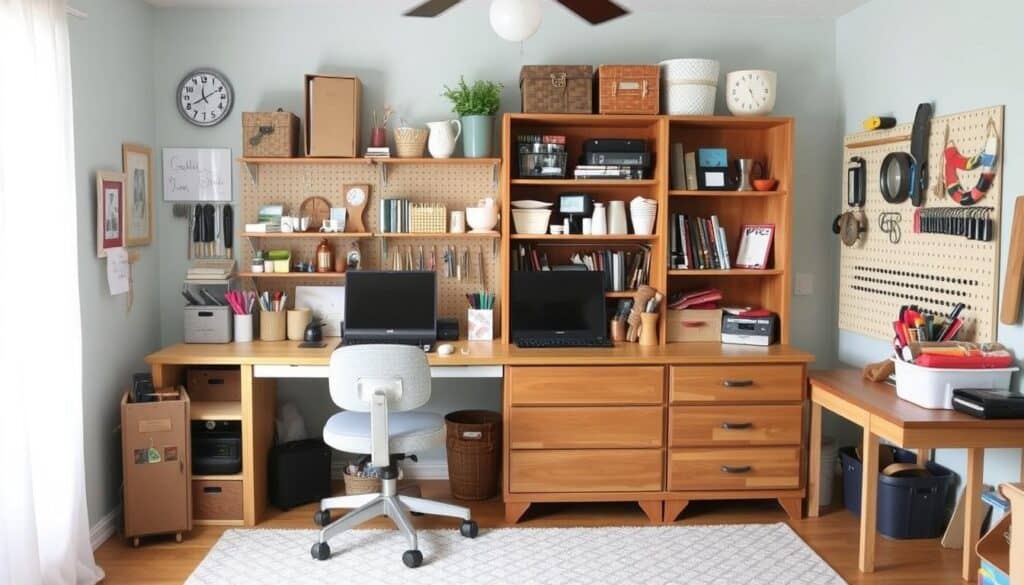
Creating your dream hobby room doesn’t have to break the bank. Try these cost-effective approaches:
Repurpose Existing Furniture
Look for ways to reuse what you already have:
- Bookshelves repurposed for supply storage
- Dining tables as work surfaces
- Dressers converted to storage with drawer dividers
- Kitchen cabinets repurposed for craft storage
DIY Storage Solutions
Create custom storage for a fraction of the cost:
- PVC pipe organizers for rolls of paper or fabric
- Mason jars for small item storage
- Pegboard systems for tools and supplies
- Repurposed kitchen organizers for craft supplies
Shop Smart
Find deals on new items when needed:
- Check secondhand stores for furniture and storage
- Look for modular systems you can expand over time
- Watch for sales on organizational supplies
- Consider kitchen and bathroom storage for hobby use
Need Budget-Friendly Design Help?
Our designers specialize in creating beautiful, functional hobby spaces for every budget. Get personalized recommendations that maximize your investment.
Personalizing Your Hobby Room Design
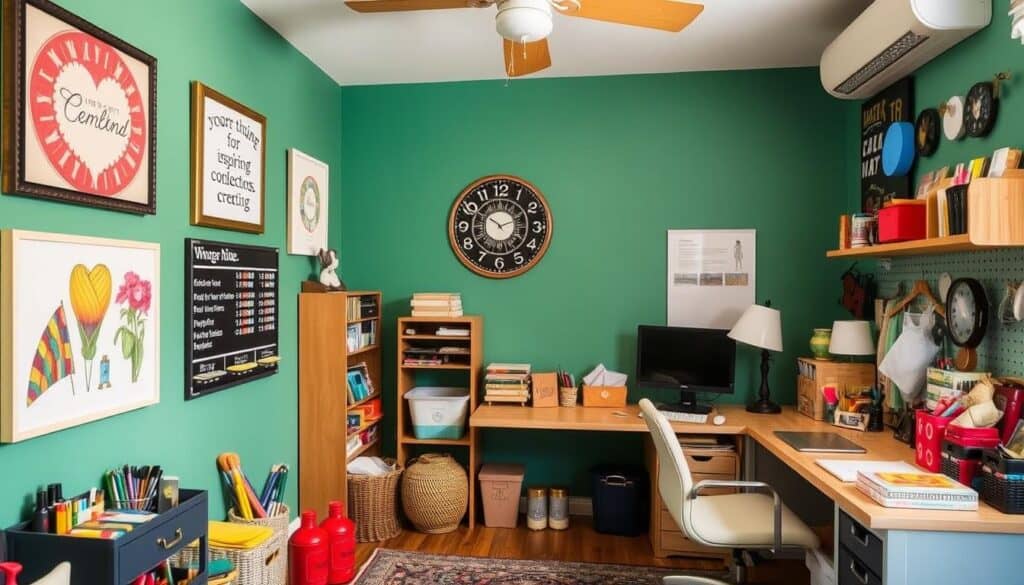
Your hobby room should reflect your personality and inspire your creativity. Here are ways to make the space uniquely yours:
Color Psychology
Choose colors that enhance your creative experience:
- Blues and greens for calm, focused work
- Yellows and oranges for energy and creativity
- Neutrals with colorful accents for balance
- Color schemes that complement your hobby materials
Inspiring Decor
Surround yourself with items that motivate you:
- Gallery wall of inspiring images
- Display area for your finished projects
- Quotes or mantras that encourage creativity
- Plants to add life and improve air quality
Comfort Elements
Make your space somewhere you want to spend time:
- Comfortable seating for breaks
- Good quality chair for your main work area
- Proper temperature control
- Music or podcast setup
- Refreshment station for drinks and snacks
Maintaining Your Hobby Room
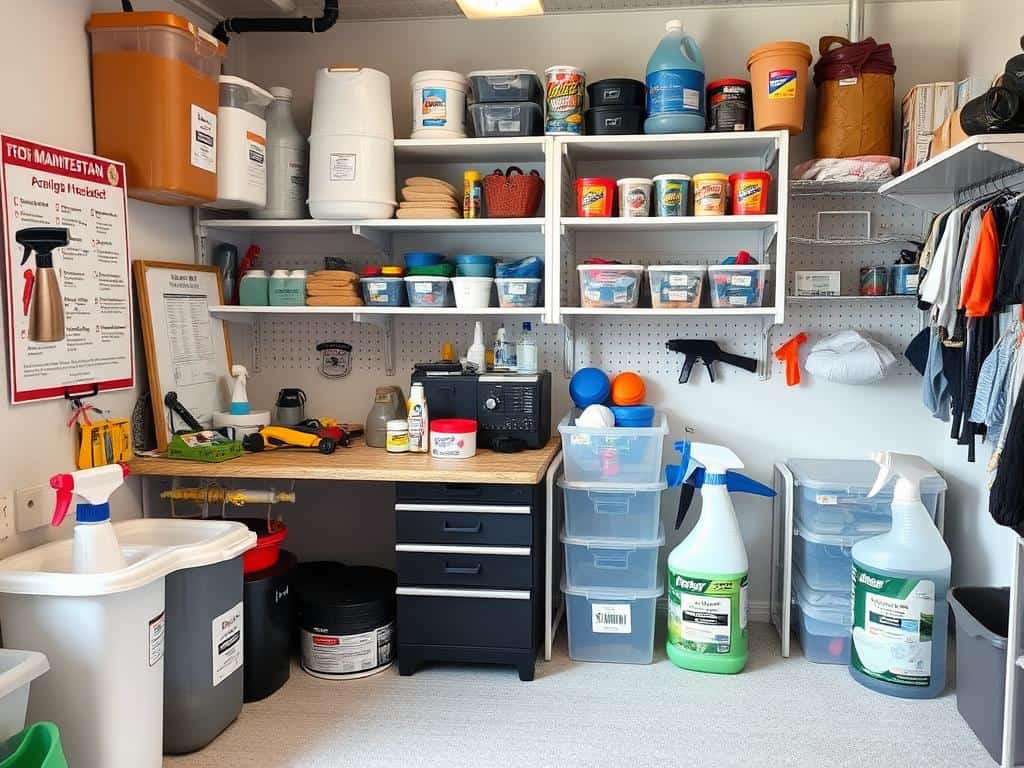
Keeping your hobby room organized and functional requires ongoing attention. Implement these habits to maintain your space:
Regular Reset
Develop routines to keep your space in order:
- End each session with a quick 10-minute cleanup
- Return items to their designated homes
- Keep cleaning supplies within easy reach
- Schedule monthly deeper organization sessions
Evolve Your System
Be willing to adjust as your needs change:
- Reassess your storage system quarterly
- Purge unused supplies annually
- Adjust organization based on changing projects
- Upgrade furniture and storage as budget allows
Maintenance Checklist
| Timeframe | Maintenance Task |
| Daily | Return supplies to designated storage, clear work surfaces |
| Weekly | Vacuum/sweep floors, dust surfaces, empty trash |
| Monthly | Reorganize any cluttered areas, check supply inventory |
| Quarterly | Deep clean all surfaces, evaluate storage effectiveness |
| Annually | Purge unused items, refresh organization system as needed |
Real-Life Hobby Room Design Inspiration
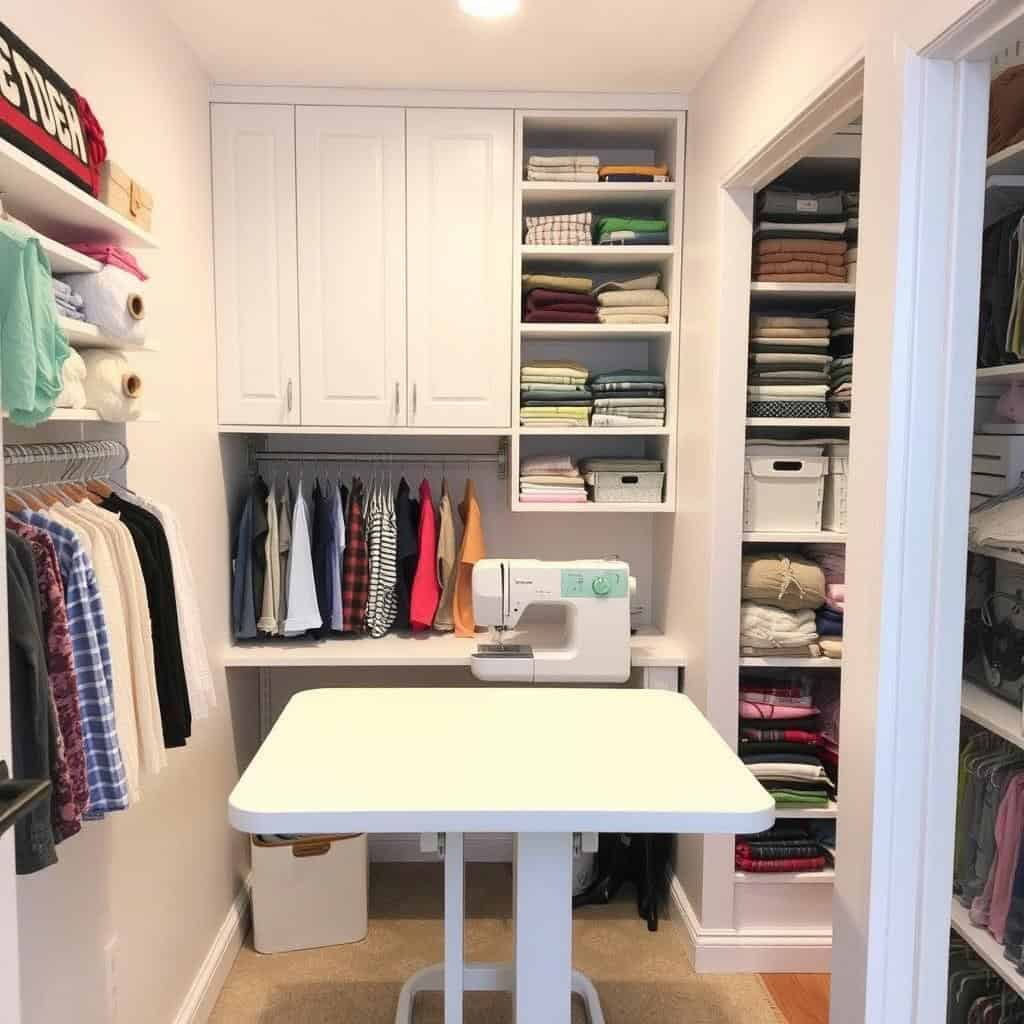
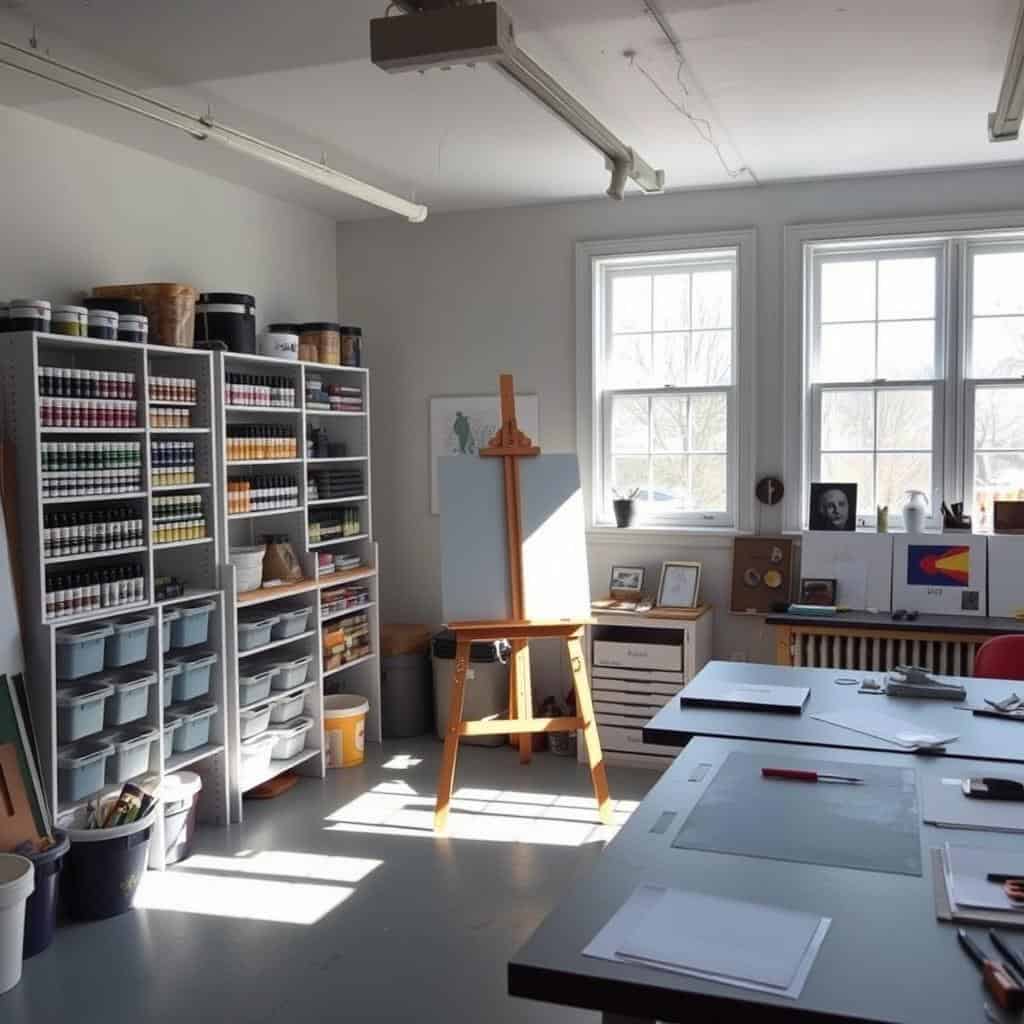

Small Space Success Story
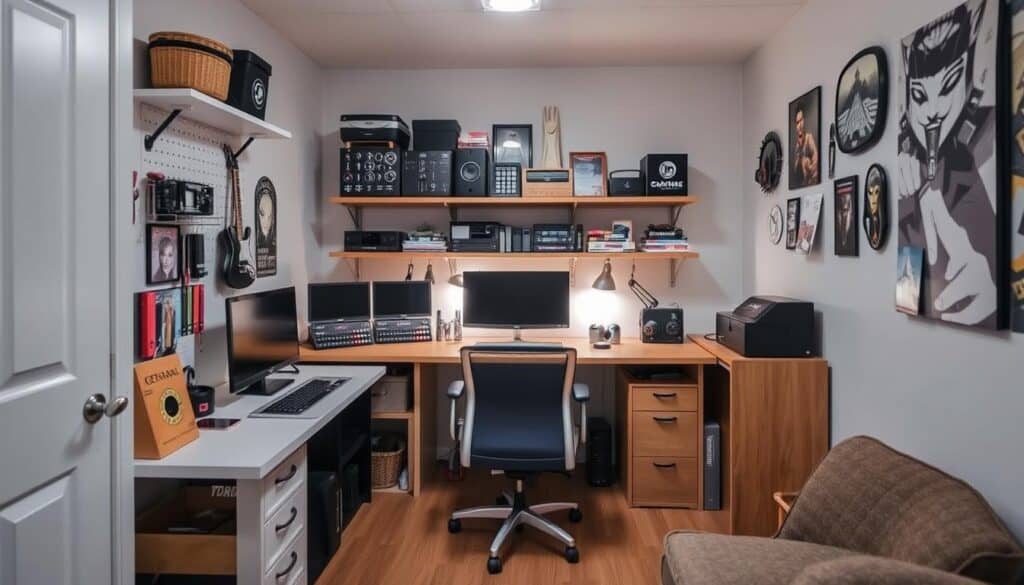
Sarah transformed a tiny 8×8 foot spare room into a fully functional craft space by:
- Installing floor-to-ceiling shelving on one wall
- Using a drop-leaf table that can expand when needed
- Adding pegboard above the work surface for frequently used tools
- Implementing a rolling cart that can be tucked away when not needed
- Using the back of the door for additional storage
Multi-Purpose Room Transformation
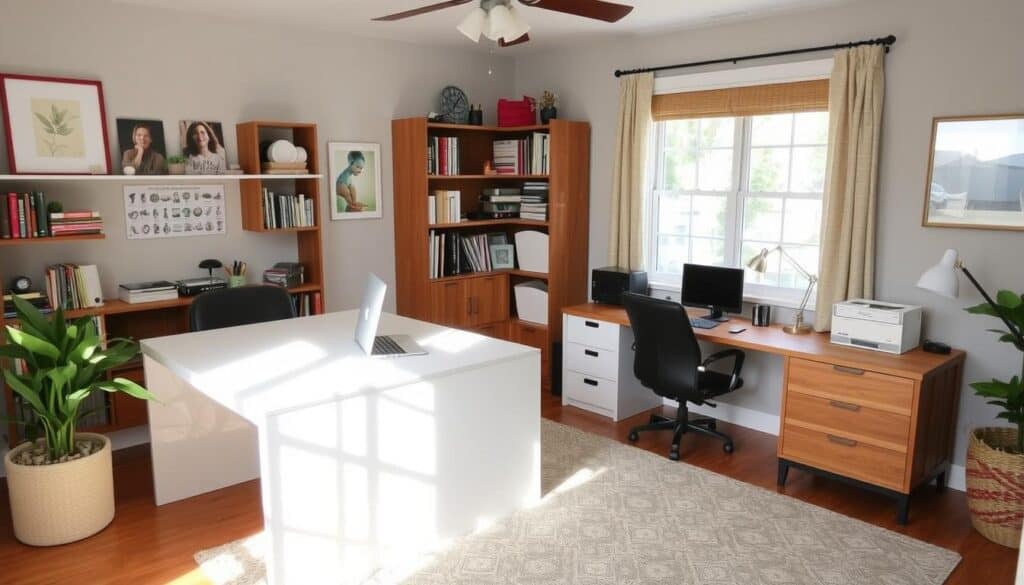
Michael created a space that serves as both home office and music studio by:
- Dividing the room into distinct zones
- Using acoustic panels that double as decorative elements
- Installing cabinets that hide music equipment when working
- Creating a modular desk setup that can be reconfigured
- Using color coding to visually separate the spaces
Ready to Create Your Dream Hobby Room?
Our design experts can help you transform your space into the perfect hobby room, no matter your interests or budget constraints.
Creating Your Perfect Hobby Room: Next Steps
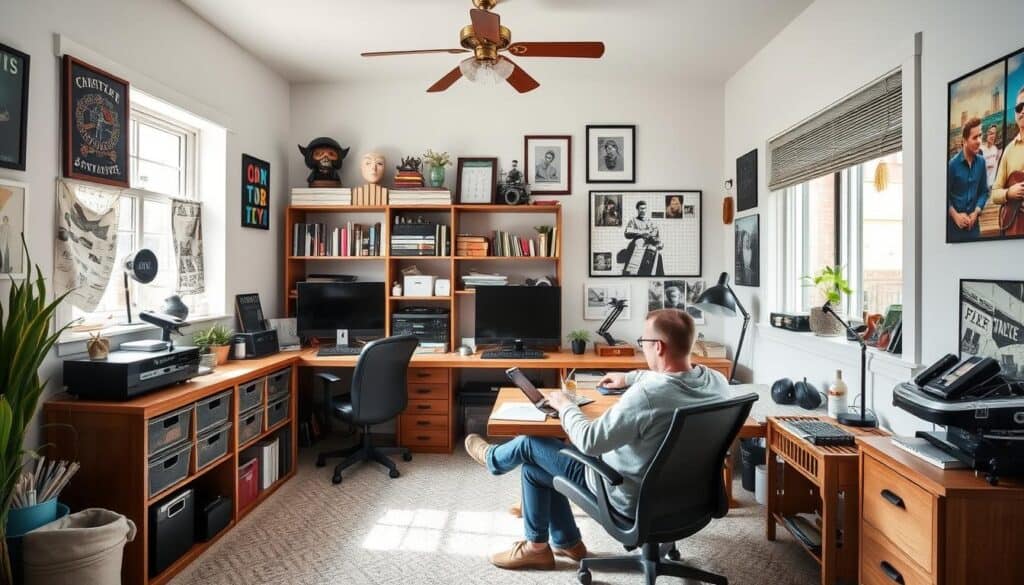
Designing your ideal hobby room is a journey that combines practical considerations with personal expression. By thoughtfully planning your space, implementing effective storage solutions, optimizing lighting, and adding personal touches, you can create a hobby room that not only meets your functional needs but also inspires your creativity.
Remember that your hobby room can evolve over time as your interests and needs change. Start with the essentials, and don’t be afraid to adjust your setup as you discover what works best for your specific activities. The most important thing is to create a space that makes you excited to pursue your passions.
Whether you’re working with a dedicated room or carving out a corner of an existing space, the principles of good hobby room design remain the same: prioritize function, organize thoughtfully, light appropriately, and personalize meaningfully. Your perfect hobby room awaits!